Monday, July 15, 2013

Eyeshield 21 Review (Wii)


Eyeshield 21, for the Nintendo Wii, might look like a traditional American Football game, but it isn't. In actuality it's a mini-game collection centered around the staples of football such as running and passing the ball. The main-game has less to do with actually playing football but rather acting out the scripted scenes from the manga/anime; in the 15-Scenario Single-Player you will only play two full matches of football, with the remaining thirteen scenarios being dialogue, one quarter of a match/two minute warnings, and obscure mini-games. There is a football game here, but you'll only be playing it in Exhibition and Tournament modes.
Unfortunately, while Eyeshield21 does offer an extremely unique take on how a football videogame can play none of it comes together to form a compelling experience. And it isn't just that the aspect of football is lacking, but gameplay also.

The Running Mini-Game is both Inconsequential and a Total Waste of Time
Eyeshield plays out in a simple manner; both offense and defense are limited to five actions, be them enacting a style of play or defending against it. You can run, pass, line-dive, field goal, and punt (on 4th down). For offense each of these plays incorporate a mini-game, while defense mostly has you waggling your Wii-Remote to initiate sacking the QB or kicker based off a timer that you speed up. For defense though there's hardly anything noticeable about picking the right defense; for passing and kicking it shortens the amount of time the QB/Kicker has to set the ball off, but for running and line-defense it's virtually invisible.
Passing brings you into the eyes of quarterback. Pointing your Wii-Remote at the screen you can survey your three receiver's (who always run the same routes) and choose which one to pass to. It does not matter whether one appears open or heavily guarded; the mini-game and chance of success/failure is always the same. Choosing prompts another mini-game where the ball is seen coming at you in the air; both offense and defense point their remotes at the screen and click the ball when a target surrounds it. If offense clicks first the catch is received; for defense it's swatted away or intercepted.

This is a Special Move, but there is no difference between a special run and normal run
Running the ball allows you to choose either your fullback or halfback, but the only difference between them is their special moves (which is detailed below). The runner can be controlled by the Wii-Remote but it is inconsequential; the defense is faster, and they need only be in a proximity to the runner to initiate a mini-game. This mini-game is the largest error of the game; it brings up a "Guess Which Way" prompt where offense and defense swing their remote in a direction. If their the same defense tackles the runner, but if not the runner stylishly passes and continues. The issue here is, beside the Wii-Remote not always reading your swipe, is the amount of time this mini-game takes up. There are two videos in it, and each video is between 5-10 seconds, with the mini-game being three seconds. This may not sound long but it is never singular; all running plays will throw you right into the midst of at least three defenders. The moment you pass one and end the mini-game the next starts, frequently before your runner can even put his foot down. Each running play ends up eating about a minute of time, and at the end of it you'll be lucky to discovered you ran more than three yards. This is no exaggeration; running truly gets you nowhere, as you will always face at least three defenders and by the end of them your character is out of stamina. The moment a fourth defender catches you, which will happen immediately after passing the three, you will be tackled.
Kicking/Punting is the same, and surprisingly simple. A bar on the right goes up and down; flick your Wii-Remote at the top and the kick is a successful one. Line-Diving opens a mini-game where offense and defense waggle their Wii-Remote in a game of two-round tug of war. A bar at the top designates who is winning and at the end of a few seconds whoever has shoved more wins, allowing a successful dive of a few yards or blocking it.
Seeing from the Eyes of the QB is cool, except there is nothing that separates one QB from Another

Akin to anime titles, there are special moves, but like the rest of the game they are essentially inconsequential. Based off five-bars in the corner of the screen, some players have special moves that use up those bars (between two and three bars each). As seen in the pictures above, using a special move while running initiates a flashy move where the runner passes the defenders; the problem is that there is absolutely no difference between a special-move run and just running. It follows the same rules; used the special move but swiped the same as defense? You're stopped. Use the special move and pass the defense? The next defender right next to that one stops you and initiates the same mini-game again anyway. Passing is the same; even if your QB sets the ball on fire with his bullet-pass it goes the same distance as it normally would, and whether or not your receiver catches it is based off the receiving mini-game regardless.
The two that actually do anything are the Line-Dive and Receiver special. Using a special on Line-Dive wins the tug-of-war after only one round, while with receiving this allows your receiver to keep running after he catches it.

Verdict:
Going to my "Verdict" all of a sudden seems hasty, but really I have nothing else to say about this game other than the description of its controls and gameplay and how most of it doesn't work or do anything. Eyeshield 21 boasts unique ideas, but it contradicts itself by making 90% of the game immaterial. Most of it doesn't do anything, or just eats up time making you watch a video of something you'd rather be in control of. And really, the game just isn't fun. You can run the ball and waste a whole minute for a yard or two, or just pass the ball ten yards to a receiver who isn't able to keep running after he catches it. But really; there's just nothing fun about any of it. The game has the graphical charm to lure a gamer in, but actually playing it is just repetitive, dull, and lacking in any sort of incentive. It isn't an exciting anime despite its cosmetic, and it isn't a sports game despite its cosmetic. And honestly, I don't know if this is even a videogame, because nothing the player does actually seems to matter.

 The Language Barrier
If you're still adamant on getting this game than you're fortunate; there is virtually zero language barrier. While you won't have much of a reason to play the single-player as it's 80% dialogue, the core game itself is very easy to grasp. Upon starting the game is a forced tutorial that goes over each element of the game individually, and is even paired with visual Wii-Remote demonstrations to make sure you're doing it right. This game is 100% playable even if you do not know a lick of Japanese.

Sunday, July 14, 2013

Puppeteer "Rehearsal" Demo - Impressions

Puppeteer

This week the first of demos for the upcoming Puppeteer (PS3) was released onto the Japanese Playstation Network. This demo is called the "Rehearsal" demo because it is not the actual "full-game" demo. It's a demo that is used to introduce the controls and overall game-mechanic of Puppeteer, which is a pair of magic scissors (named Calibrus) that the player uses to cut through the world. These scissors serve primarily as a means of traveling where, when cutting through objects such as flags or clouds, it instills a motion similar to "clawing" across it (but at a brisk, satisfying pace). Inside this brief, five-minute demo you make your way up to the top of a tower while simultaneously cutting it and destroying it.
And at the end of it I really wished there were more, as this game is looking to be great.
Cut 'Em Down!
This is the primary way of travel; essentially, these bats are a ladder
Unfortunately I do not understand Japanese, and so the stunning introduction video, which shows off the game's bosses as well as gives what I believe is an overall introduction to the story, as well as the large amount of dialogue that runs throughout while you play, I did not understand, and so whether or not it reveals anything or strengthens the experience is beyond me. Still, the video, and characters, and overall "mood" of the thing was simply sensational, and really delivers this overtly charming experience of being inside of this comically-dark children's story and performance, and throughout the whole demo the same quality and attention to detail was displayed with equal strength in-game as it was inside of the video.
Again, it's a short, five-minute demo, but it does grant a bit of mobility. As a platformer Puppeteer seems to bear physics akin to traditional Mario titles, which is that it is much tighter than the floaty-ness of the Little Big Planet series, but certainly not as tight as in Mutant Mudds. You are limited to a single jump (in the demo at least), but unfortunately there is very little to try the base-platforming out on here. Instead, the focus is fully on Calibrus, the magic scissors.
The Glowing Strand Here Allows you to Cut through Much Faster: reminded me of Classic Sonic
The Glowing Strand Here Allows you to Cut Through Much Faster: the Speed is of Classic "Sonic" Games
As you progress up the tower you come across a variety of things that you can cut and therefore travel by, from tarps that cascade down from the ceiling to smoke-clouds generated by jackhammers. The tell-tale on whether or not you can cut these things is that interactive things are prominent on the screen, and not of background; it seems loose, as at the jackhammer clouds I was not immediately aware I could cut them, but there is no frustration here, and discovering what can be interacted with seems more a delightful mystery rather than frustrating or obscure.
Cutting is a speedy process of mashing the square button that is accompanied by oddly soothing scissor sounds. Objects bear their own sounds as well when under the blade; tarp fabric tears while spider webs peel and wobble. A lot of detail is also in how these mangled objects fall apart, and each of them display a consistent blend of realistic alongside imaginary in their destruction.
Beyond the basic cutting the demo also offered two unique moments with the scissors, the first being when you come across a tentacle arm shackled into the wall. This brought a button-prompt atop the characters head that required the quick-mashing of the square button; success brought the tentacle slamming out of the wall and offering a new path, but failure did nothing.
The second mechanic actually brought to mind a once beloved series of mine; Sonic the Hedgehog. In the picture above is shown a glowing strand; when you cut into these strands your characters cuts through at an extreme pace and as if on-rails, following the glowing path linearly. In the demo these strands are throughout the top of the tower, and offer really unique pathways of swerves and loops. When one ends abruptly your characters is thrown the air, and slicing into another rail-strand before touching ground offered a really great sensation of speed and control. I could really imagine a lot of uses for these rail-strands and overall I'm pretty excited to see what can be done with them.
No Doubt About It; This Game is Beautiful

Again, this is the "rehearsal" demo, and so there's plenty of Puppeteer not shown here, or is just omitted. For one, the cat you control by the right-stick is totally absent, and as you've only one head there's no experimentation with the aspect of swapping heads and what their uses are. Also strange was that you can't receive game-over here, as at one point there are enemies; get hit and your character's head flies off and you've to chase it and reclaim it. But if it falls off a cliff it is just returned to you, and also you are granted invincibility while headless. Truly, this is just a very basic, clean Tutorial, rather than a game-demo (which is coming).

Overall I loved what I got to play though, and am pretty blown away by just about everything. The art-direction is just charming as can be, the overall graphics/animations simply delightful, and the gameplay is just solid. It's a lot of fun but it's also simple, but never once did I think it "babyish" or dull. Really, this is looking to be just one heck of a genuinely fun videogame, and I am certainly eager to get my hands on the full thing soon.

Friday, March 1, 2013

10 Most Anticipated Titles of 2013

10: Metal Gear Rising: Revengeance - PS3/360 
Needn't really say much to explain this being on here; game looks slick as can be, and anything from Platinum is pretty much a shoe-in for the most exciting, and well rehearsed, gameplay anyone could desire. I have always hated the MGS series for it's gameplay, but have very much admired the story and how expansive it is. This time, I'm very excited to actually be playing the game and experiencing the story, rather than just Wiki-ing it.

9:  Snapshot - PS3/PSV
There is about one game every year that makes me go crazy for a platform I don't own, and Snapshot in 2012 was that PC desire for me. Everything about this game, from the completely hand-drawn worlds and characters, express gameplay of "snapshoting" objects and creatures and placing them as you see fit, and the exciting, yet still calming, soundtrack has me just almost unnaturally excited to take on this title. I'm very eager for the Vita version, as this is one of those games, such as Sound Shapes or Little Big Planet, that I think is going to be tremendously boosted by the touch-screen capabilities.

8: Rodea the Sky Knight - Wii/3DS


No, this game is not officially announced for 2013 at all. But the game is already finished and has been so for over a year, so I'm thinking that this is the year they're going to make a call on what to do. No less, I'd be shocked if they just throw away an entirely completed Wii title just because they can't find, or can't percieve, an opening in the 3DS market. For so unique a game like this to come out of Sonic Team also, I just really cannot wait to explore everything it has to offer. Plus, I'm just a big fan of flying around as well-drawn characters (Gravity Rush

7: Tearaway - Vita


 From Developer Media Molecule (the guys behind Little Big Planet), Tearaway is looking to be the most formal, honourable and downright stellar use of the Vita and it's various capabilities yet. The whole thing is set in a world of paper, and everything acts in accordance to either the variables or physics of, well, paper! It looks strange, charming, adorable, and often utterly insane--- and it's going to be awesome!

6: Macross 30: Ginga o Tsunagu Utagoe - PS3

This game probably would be higher if I had actually ever watched more than a single episode of Macross--- which was about a decade ago that I did see it. And it was Robotech; not an actual macross episode. Still, this game looks bad ass; classified as a "Flight Action RPG," Macross 30 is tying in the whole slew of several Macross series and offering what is a seriously intimidating level of content and customization. It looks wild, to say the least, and most importantly an absolutely erratic blast of sheer gameplay-based fun.


5: Soul Sacrifice - Vita

In Inafune, we trust!
As Comcept's breaking title on the Vita, it isn't far-fetched to say Soul Sacrifice looks to be the most amazing game the system is going to see for a long time, and possibly a shoe-in for "Best of" down the line. I already dropped some 15 hours into the demo before I just had to stop teasing myself; I just want the whole thing, and I want it now!


4: Senran Kagura Shinovi Versus - Vita

This is a series that is pretty much built off the term "fan-service," and in particular the kind only the Asian markets get to enjoy. Young, super busty ninja girls, pretty much nude, battling each other to see who can destroy the others clothing before the other one does, and therefore win.
Yep. It's a pretty stimulating game, but Shinovi Versus is holding a lot more than just fanservice. Taking gameplay designs from the Dynasty Warriors series, Shinovi Versus features an incredibly lively and detailed anime-style alongside what is a mammoth list of playable characters that each have a separate, unique way of fighting. There's a ton of variety within this title, and as the Senran Kagura universe has now expanded from the initial 3DS title into an anime, 2nd 3DS game, manga, and now a Vita title, there is little doubt that Marvelous AQL want this series to succeed, and are going to present their very best with Shinovi Versus.
*By the way; out of all wacky online modes out there, I'm pretty sure Shinovi Versus wins; there's a "Panty Rain" mode, where panties rain from the skies and the goal is to collect more than your opponents. So as you're killing each other and sending off rapid Undressing/Tearing cut-scenes, you'll be collecting plenty of panties... it's like the best possible dream an eighth grader could ever have!*

3: Sei Madou Monogatari (Holy Sorcery Story) - Vita

Holy Sorcery Story is essentially a mix between Rogue games and Item-Shop games. The goal is to build the the magical curry, and you do this by setting out to find the four magical ingrediants nessecary. Naturally, these ingrediants are inside of dungeons and the innards of monsters, so as the surprisingly non-sexualized protagonist (this is a game from Compile Heart, afterall), a fail-out sorceress Pupuru, you do just that, all the while assisting a neighboring Curry Shop from going out-of-buisness.
There isn't too much known about this title yet, but no less it is my number 3 for the year. The small bits of gameplay seen in the trailer here really hit me well, and in particular I think the art-style is just some of the most approachable and "neighborly" I've ever seen. The concept is simple and nice, and this is a type of game I can just really see myself chowing down with and just straight enjoying.


2: Monster Monpiece - Vita

If you thought the above mentioned Senran Kagura Shinovi Versus was sexual, you don't even know how sexual it can actually get, and that's just what Monster Monpiece is here to do.
Before I acknowledge the novelty though, I want to say what this game is; Monpiece is a card game, that takes place on a 7x3 grid where the goal is to draw your cards directly into your opponents frontline, where you can than take out their actual HP. The overall rules of the card game are a bit harder to explain, but it's actually a somehwhat simplified card game that focuses on the bare fundamentals of card-battling to offer what is, while simpler, a more approachable gameplay that I, personally, think maximizes the aspect of PvP on a more social level. This is a big deal for me as I've actually been really wanting to get into card-battling games again, and to be honest the digital Yu-Gi-Oh and Magic: The Gathering games just intimidate too much. I did play both back when I was a kid (we're talking ten years prior), but there are so many new rules and additions that I genuinely am just not willing to learn them. Hence, I am really excited for Monpiece as it is essentially what I've been asking for.
But it is sexual. How sexual, you ask? Well, you literally masturbate your vita to power up your cards while a young monster moe girl cooes in pleasure. Yeah--- I know I can't convince anyone that that isn't why I'm interested in the game, but it is, also, one reason I am. I'm personally not bothered by anything like this; I just think it's creative and very funny for it's uniqueness and ingenuity, and I'm personally looking forward to undertaking a nice rub-job while on public transportation. Still, this isn't all that is sexual; the main story bears a lot of what made people uncomfortable with games like HyperDimension Neptunia and Mugen Souls, and there's essentially innuendo throughout the entire thing.
Still, the moment this game was announced I really just fell in love. The monster designs are great, the gameplay is exactly what I'm looking for, and the sheer level of creativity inside of this title is just wild. I already have my copy ordered and it's actually in delivery now, so I'll be sure to let you all know personal impressions when it arrives!

1: Killer is Dead - PS3/360

 I decided, after having played through the original No More Heroes, that if I were to ever get a novel published I would dedicate my book to Goichi Suda (Suda 51). The man's videogames are the very definition of creativity, and his ability to not be deterred by any creative restriction, whether logic or rationality or even the most ingrained of human sensibilities, is something I admire in the most complete sense. And what's wild is that outside of No More Heroes 2: Desparate Struggle, I actually didn't really enjoy any of his (localized) games gameplay-wise. No More Heroes' long, meaty segments between the main game were dull and boring; Shadows of the Damned was a generic third-person-shooter; Lollipop Chainsaw was a pretty broken/unsatisfying action-game, and Killer 7 was a game that, while I was fine with, didn't actually have "fun" with.
But that's gameplay-wise; in the whole view though, these are all my favorite games. In them each is just what is senseless, pure creativity, and it's untethered; anything is possible in Suda 51's games, and for it I'm essentially grateful. They're refreshing, inspiring, and to me offer what I enjoy most from videogames; immersion, and the ability to suspend any disbelief because of it.
Killer is Dead certainly looks to be Suda's most personal, capable title to date, and wields everything that makes his previous games enamouring alongside his own growth and maturity in game development. I truly cannot wait for this game--- I am just blown away by literally everything known about this game so far, and cannot even express my thoughts. Just can't wait--- can't!

Thursday, January 10, 2013

Top 5 Games from 2012

It has been 20 days since the apocalypse--- err, ten days since the year ended, and I think I have effectively sorted out remembering the mammoth amount of titles I've played through this year as well as making sure that they were actually released in 2012 to compile this list. Now I can't say that I have played every game that came out in 2012 or that my list isn't biased or what-not--- but I really do just kind-of want to slap these games onto your digital faces because they were really that much fun and deserve considerable attention!

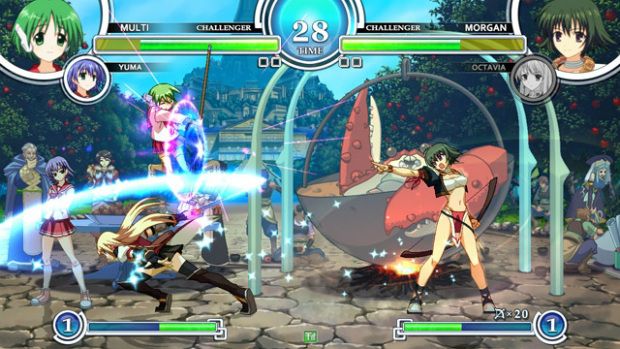
#5: Aquapazza: Aquaplus Dream Match (PS3/360)

Fighting games aren't really my "thing," particularly because I suck at them. No less, Aquapazza is an absolutely stunning fighter that is highly inviting to novices and experts alike. Boasting some of the brightest, most enjoyable colors beside a hip, modern soundtrack, Aquapazza is as much a treat to witness as it is play. With a roster of all Visual Novel characters (ToHeart, Comic Party, White Album, etc:), this is a very slick Cross-Over fighting game that utilizes more singular, calm attacks that do high damage rather than the increasingly popular high-speed "anime" fighters (if you're familar, this is very similar to Garou Mow, another excellent fighter). Picking this game up to play on your lonesome is fine, as the game holds a unique story-mode for each character as well as a "Another Story" mode, as well as the usual goodies of Score Attack, Training, etc:. Still, grabbing a buddy(s) and chowing down for a tournament is just a real treat; as each of the 14 main characters can be paired with any of the 14 support characters, there's a ton of character variety and exploration to be had, and the idea of losing an entire day exploring the roster is anything but far-fetched. No less, you certainly won't regret it.

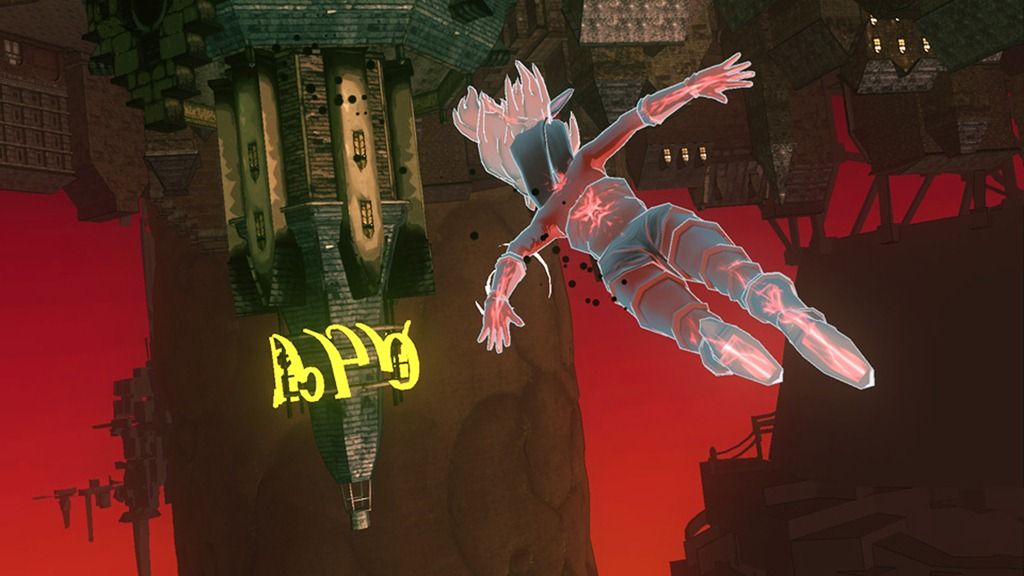
#4: Gravity Rush (PSV)

Not all superheros need to talk as though they've just regrettably answered the phone while on the toilet or play pensive as to whether or not they are vigilantes or murderers. Sometimes they can just be young girls, who have magic cats that let them fly, and have a good heart for the sake of having a good heart, and boy does that make Gravity Rush refreshing.
Gravity Rush is an open-world game that follows the story of Kat, an amnesiac who suddenly wakes up in a floating city. With the aid of an otherworldly, magical cat, Kat has the ability to bend gravity, fly, and, most importantly, kick serious villain/time-morph creature butt. It's a lengthy journey that wields a floaty, passive aesthetic that really is all about just letting you decide on how to proceed. Side-quests are abundant, and the spacious cities are decorated with a plethora of collectibles to find and collect, not to mention that they are each simply gorgeous and a real treat to just loiter around in. It's the main-quest though, and its subtly melancholy tale, that is the real draw. The plot moves at an arresting pace; each mission holds significance to the story at-hand, keeping you on attention and immersed while increasingly decorating you with new combos and abilities. It shows the growth of a superhero enigmatically well; while the journey has up's and down's, doubts and terrors, light and darkness, it never loses sight that it is Kat that is the protagonist, and by focusing on her, and her reactions to the strange, distorted world around her, that Gravity Rush really champions from all fronts, be it as a videogame, a story, or experience.


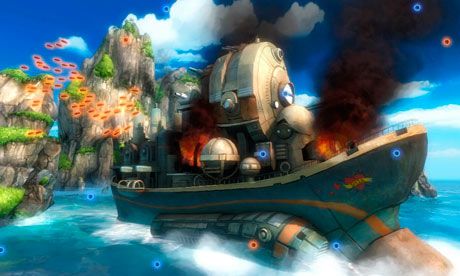
#3: Sine Mora (PS3/PSV/360)
Akin to #5, I am also not very skilled at Shmumps. No less, when I saw some of the outrageously cool boss designs from Sine Mora and learned that the majority of them were drawn by a Mahiro Maeda (Animatrix, Kill Bill), I decided that I just had to see them all.
Fortunately, the game is excellent also, and despite it coming out of Grasshopper Studios and Digital Reality, this is certainly one of their most grounded and mature works. Telling a highly captivating story of time-travel and political unrest, Sine Mora is a very unique shmump that does away with the majority of the genre's conventions and focuses instead on exciting cinematics, fleshed out scenery, and emotional aesthetic to deliver a concise, complete sensation and reward for what is a very challenging game. And by challenging I mean really freaking hard, and this is exactly what makes it such a unique game; I've never known a title to truly instill so great a sense of "betterment," and from the first moment you muck up or are caught off guard you won't go throwing the controller (or your expensive Vita) but instead getting focused, trying again, and doing better, inch by rewarding inch. It's odd to explain, but despite Sine Mora seemingly getting off on watching your continues be shredded off like warm cheese, it never laughs or mocks you. Truly, Sine Mora wants to be conquered, and that's what makes it so inviting. It can be done, and it's in you, the gamer, putting the effort out there that really makes this title so remarkable and memorable.


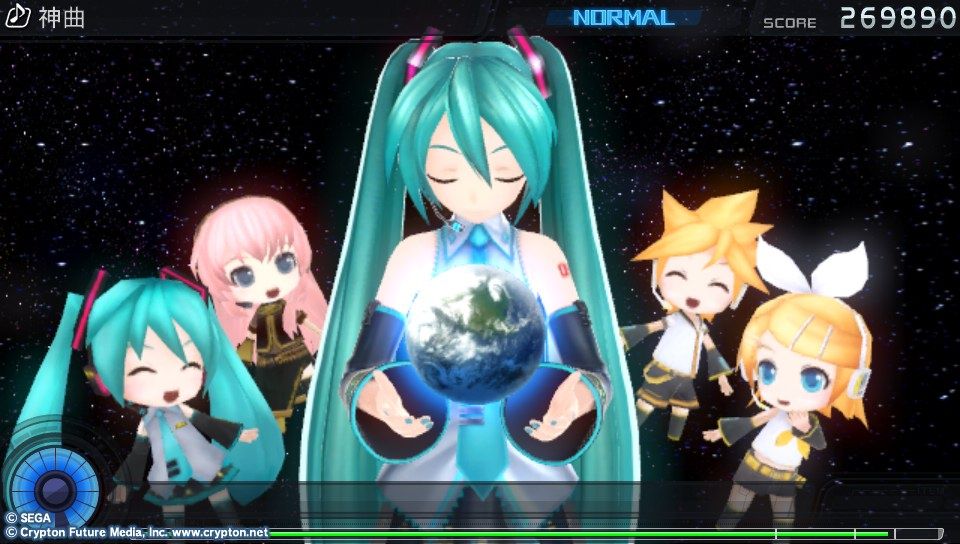
#2: Project Diva f (PSV)
Like every import-gamer out there when this series comes up, I'm afraid I have to get this out of the way.
I LOVE MIKU <33333
But seriously, the Project Diva series is truly something special. A rhythm game that holds a simple mechanic of just pressing whatever buttons appear on screen, Project Diva is a hip title that offers something I can only describe as "happiness" when you play it. The music selection is modern but varied, from J-pop through rock n'roll, and the background music videos, usually displaying Miku and friends in either sentimental or all-together ridiculous scenarios, are a real treat. Everything about the game is colorful and delightful, and paired beside what is a consistently thoughtful compillation of music selections, the series just succeeds time and time again. It's one of those games that I really just can't suggest enough for someone to go and see it for themselves, and fortunately Project Diva f does have a demo (two of the PSP titles do also!). Honestly, just go try this game; I'm sure you'll be back wondering why the hell I didn't make it the #1 on my list!

#1: E.X. Troopers (PS3/3DS)
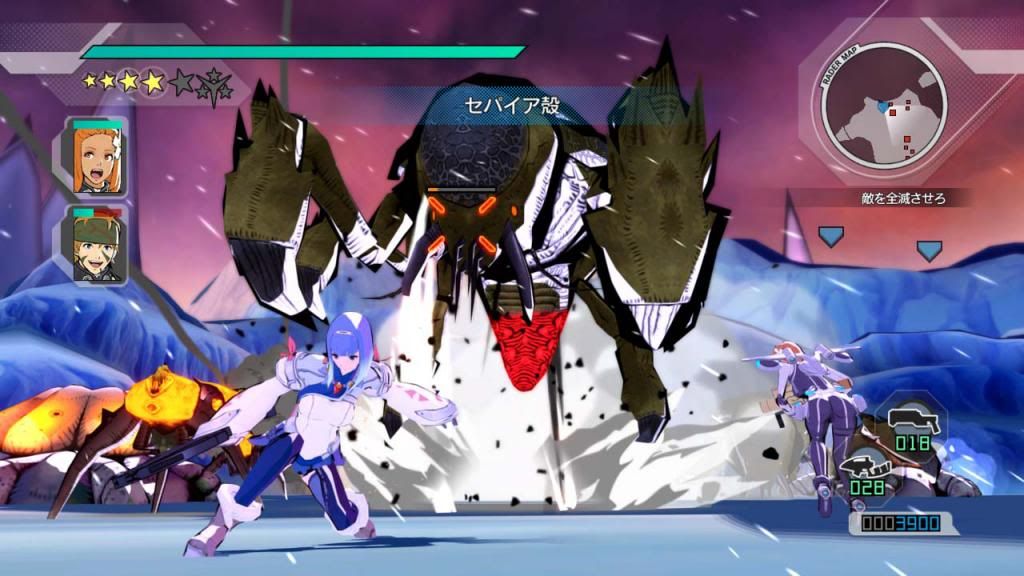
The "Hunting" genre has become an absolutely mammoth success since the release of the Monster Hunter games, and here is another title for the genre from the MH creators themselves, Capcom. This time though, it's E.X. Troopers, a spin-off of the Lost Planet series, and it's an absolutely aces experience that delivers time and time again.
Following the exploits of Bren Turner and his sudden enrollment at an academy for snow pirates, E.X. Troopers isn't necessarily "breaking walls" with anything it does. The story and characters tend to pursue rather typical, anime-established conventions (they are unique, but they ride the established line stiffly despite), and even the gameplay holds what is a certain conservatism, in actually fighting monsters as well as upgrading equipment. That said, while E.X. Troopers doesn't bring much of anything new to the table, it certainly finalizes on what is already established, and offers what is in my opinion the slickest, most stable, downright enjoyable gaming experiences of the year.
What is unique about E.X. Troopers is really just how fun it is. Truly, you can do a checklist of conventions here (Hub-town, Rock-Paper-Scissors elements, Materials), but for some reason E.X. Troopers blasts through. The music is a thrilling album of electronic music, the cel-shaded graphics, from the watery snow levels through to the reds and browns of desert levels, are captivating, and the characters, despite their cliches, are all very personable and filled with encouraging, mood-elevating quips and cheers. Playing through the story, despite it being just mission after mission, is a blast, and by the time you're nearly through, with absolutely boss weapons and refined skills at taking down three-story high Akrid monsters, taking it online and challenging the insanely difficult missions with others is just a ceaseless enjoyment, and really just does what videogames alone can offer. E.X. Troopers is just one of those titles that just came along at the right time; sometimes you really don't need to do anything new, and just present what has been there all along.

Friday, November 16, 2012

The Little Battlers W (Vita) - Early Impressions

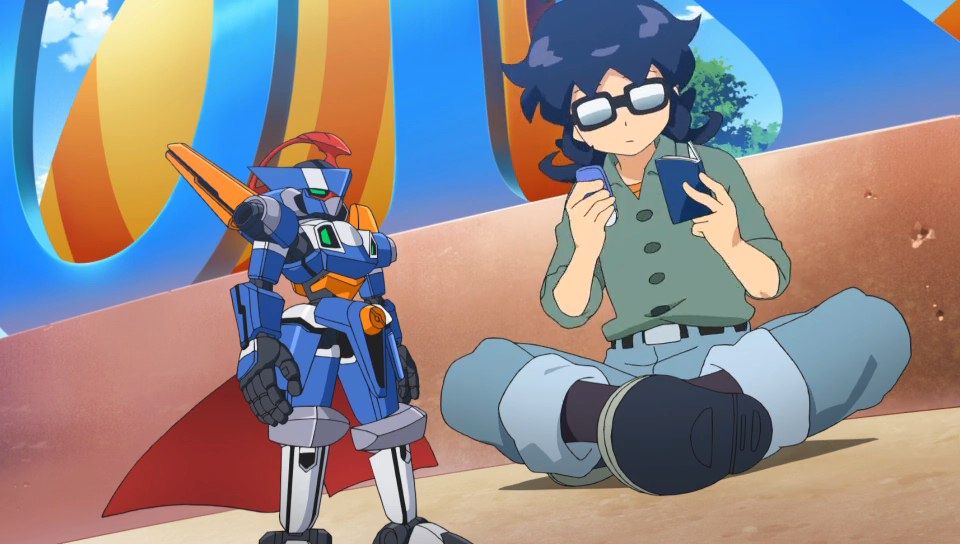
New protagonist Hiro starts out blind to the real world of LBXs, but quickly comes to dominate.

The Little Battlers W (LBW) is the third entry in the Eastern-only series The Little Battlers from developer Level-5, this time appearing both on the PSP and PS Vita. To jump the gun and gush real quick; It's awesome!
To summarize The Little Battlers games is that they're a mix of RPG and Action games. You explore the world as one young protagonist or another, chatting with NPCs and managing stats, but mostly you're getting into battles with others using your miniature robots titled LBX's to show who's boss. Battles take place in small, varying area maps that range from cities/stadiums/highlands/etc: and within them you'll fly and blast your way to victory by smashing someone's expensive toy to smithereens. It's an instantaneously addictive series, and the depth of charm and compassion within each of these titles will lure you right into the clutches of fanboyism. From the crisp, entertaining character art in dialogue to the forceful plunge of a dash move, The Little Battlers is a series that anyone of any age can appreciate for its sheer authenticity and faith within itself.


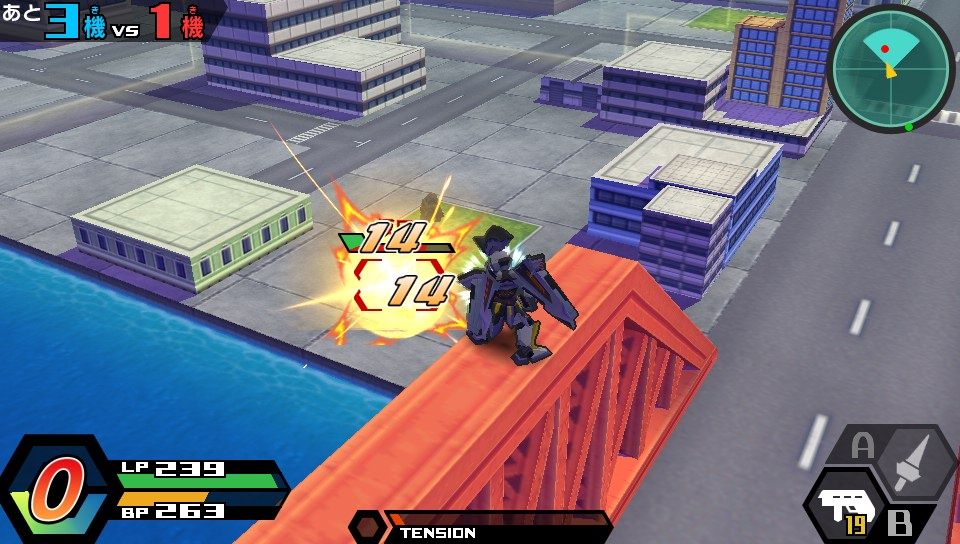
Battle Backgrounds are bland, but in-game LBX's are delightful (despite this blurry screenshot)
 
LBW starts out with casting you as an all-too geeky looking young male named Hiro Ozora. An apparant champion of the Arcade LBX game, Hiro wins a tournament and goes off to collect his prize; what is supposed to be an action-figure of his favorite hero "accidentally" turns out to be an LBX, and here LBW begins in its wild, exciting journey of adorable, miniature robot terrorism. After a brief switch of character to previous protagonist Ban Yamano where he and friends, Amy and Kazu, are unfortunately caught up in the beginning of this terrorism at the revealing of a new LBX model at the Tokyo mall, you are returned to the role of Hiro and spend the majority of Chapter 1 blasting through the mall and getting tangled into the mysterious world and plot-line of this sudden LBX outburst.
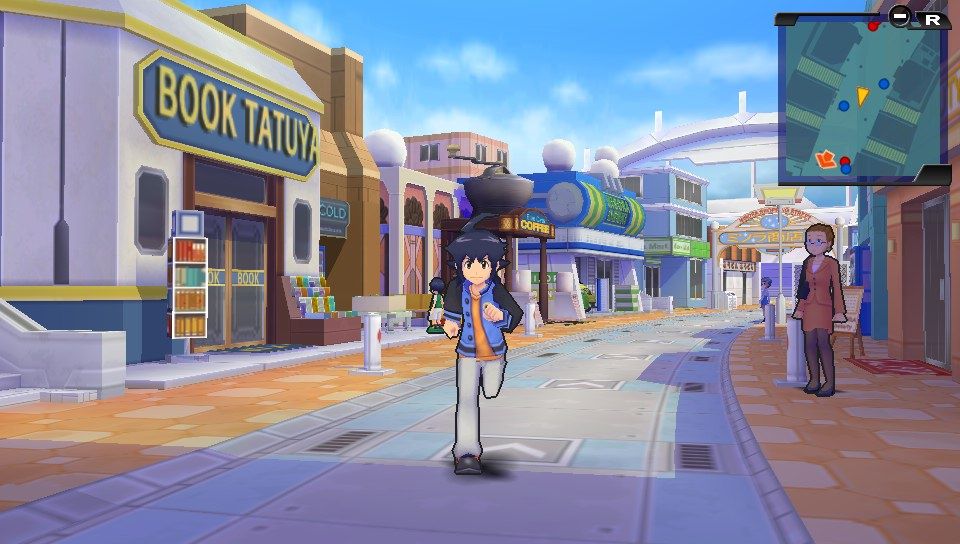
LBW is definitely a wild leap to the Vita; the anime cut scenes are simply stunning, each color and shade exploding from the screen and utilizing the OLED to its full advantage, and the world areas, from the short entryway to the imposing mall or the narrow, busy avenue of Shoten all wield a new depth from the Vita's visual intensity. The in-battle LBX's are crisp and sharp also,  cute and riddled with "kawaii" movements but intimidatingly impressive none-the-less. Unfortunately though, the same can not be said for the battle backgrounds; they're bland, appearing as they would on the PSP version rather than the Vita, with stages from the previous entries looking like they were ripped directly from them and placed here completely untouched. Fortunately though, LBW stands out for its game play in regards to battle and battle arenas, and while mostly unchanged, still shines brilliantly.

Who knew what khakis and a jock vest could do for a young man?

Battling is mostly a brief affair, whether you're battling other LBX owners or getting into fights with renegade LBXs (who are seen in-game; no random battles). Damage is high and ranged attacks, while formidable, are used mostly to build your Function ability, a special attack (multiple per weapon) that deals damage that a normal sized robot would (a lot!). For the most part though you'll be charging in, hopping over bite-sized buildings and scaling canyon sides, then slashing into each other with hopes your combo hits first. Attacks are handled solely from the Square button, but various combos can be performed by moving the left stick in varying positions during your onslaught. Again, each weapon, be them knives/dual-swords/hammers/lances/etc: hold their own slew of combinations and animations, but in LBW there seems to be a larger assortment of combo attacks possible, with launching enemies into the air and pummeling them down an impressive attack time and time again. While most fights won't push beyond a minute long, each are filled with a deep sense of reward and enjoyment, and so level grinding, whether it is your character, his/her LBX, it's subsequent parts, or individual weapons, is never once a chore.
So far, the game has been mostly linear so I haven't much to say about the scope of the world or how much else there is besides the standard LBX store and NPC interaction. Still, as stated above, the world itself is extremely impressive, particularly in scope, and it's been a delight just wandering the stretch of Shoten or punching my way through the wreckage of the mall. I can only assume that the levels, both RPG and Combat builds, will increasingly grow in both charisma and awe.

Battle combos are a delight, as the slightest movement of the Left Stick opens totally new possibilities
I'm only just past the entry point, having just started Chapter 2, but I'm having a blast. For those who have played a previous entry in the series, then there isn't much new here, but it is still the same, solid game play from prior. Personally, I couldn't get enough from Little Battlers: Boost, so I'm more than ready to dig in yet again to the LBX world.

The Language Barrier
*Firstly, The Little Battlers games, and all Level-5 games, support Furigana script. If you're a beginning Japanese student who wants to take on the challenge of understanding their first Japanese game or are just interested in building your vocabulary, these games are a terrific way of doing so.*

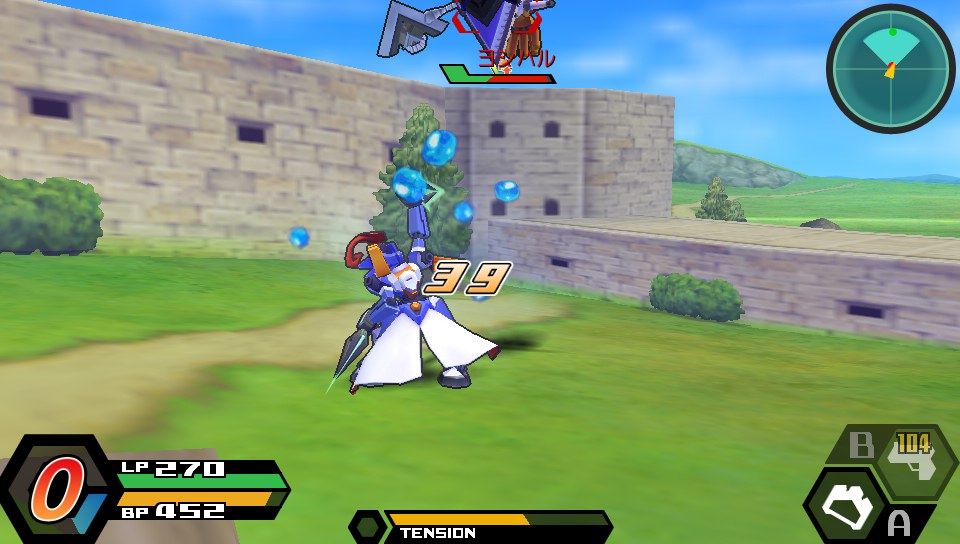
Without knowing a pinch of Japanese, The Little Battlers W is a pretty easy game to get into. Plot Progression is always known because of a pointer on the mini-map or a blatant pulse surrounding an area on the main map, and battles are handled with an almost casual simplicity of controls; there's nothing that requires you to look up a guide online to know how to do, and so after taking a spin with each button you'll have acquired the overall knowledge of how to pilot your LBX. The various faculties of battle, such as those seen in the above image (LP/BP, Tension, C) are also understood borderline instantly once you take to battling (tension is how much more you may boost/attack before being required to wait for a recharge/LP is HP, and BP is remaining Battle/Battery Points and allows you to perform Function attacks/C is just the amount of stored C points you have to perform whichever equipped Function attacks). And moving around town and chatting/battling with NPCs is also blatant and strangely enjoyable also even if you don't know the language.
That said, LBW is really about customizing your LBX, and this poses a certain degree of issue. For the most part, choosing which weapons/armor to equip can be decided by their rank and Atk/Def stats (it's written Atk and Def also, so you'll know), but there are also a slew of variable in managing your LBX, whether it is using same-set parts or understanding which stats and elements your armor/weapon supports and is weak against. This can be overcome with trial and error, as so long as you're playing the game without month-long breaks you'll acquire the knowledge/memorization of which color shade means what, except LBW poses a new issue in the form of modifying chips handled similarly to the Inventory Screens of Resident Evil games; six different chips to allow mega modifications of your LBX, from LP/BP gauge through to elemental purity, and this is a pretty aggravatingly Language-Barrier segment as messing with chips can really make or break your LBX, especially when going into elemental-heavy areas.
Still, I would say LBW is only slightly less friendly than the previous entries for the series, and that it is is no way near an "impossible" import for just about anybody who has the slightest patience. Sincerely, I haven't used my dictionary for anything other than the dialogue thus far, and I'm not doubting in the slightest how I've modded my LBX; he's bad-ass, and I know it. And that's just it; you'll know it too. Trial and error, if only for a few minutes, and then continue the game and enjoy it, which you certainly will.

Monday, November 12, 2012

Project Diva f (Vita) - Review

Project Diva, a rhythm game that began on the PSP in 2009 and has since exploded into a super series alongside wielding what is a distinctly large import following in the western sphere, is now on it's eighth entry following three PSP games, two iOS titles, one 3DS game and one Arcade entry, this time for the PlayStation Vita; Project Diva f. Hosting a vast soundtrack of 32 absolutely jamming songs, an in-game store with a tremendous assortment of outfits, items, and decorations, and a slew of gameplay additions that revolutionize the series' gameplay, Project Diva f is without question the strongest entry to the series yet.
 
Gameplay in Project Diva is similar to other rhythm games; gray spheres appear on screen which are followed by trailing button icons (the four face buttons) where you then press the corresponding button when it is near or within the sphere. The button presses are timed to the song playing so that your input is consistently syncopated with the music, a staple of the series as this is handled extremely well for not only beats of the music but lyrics also.  It is simple and accessible, but also bears a rapid change in button variety and speed per difficulty level. There are also Chance Times, which are brief segments where points are doubled (in this entry they also conclude with a "Swipe Star" (more on that below)).
The music selection is of the first radical changes, something which may have to do with the alleged lower interest from women for the series; these songs simply rock, and nearly all songs are of such extreme energy and pace that you'll rarely find yourself taking a breath between. While there are a few slower or more sentimental songs, mostly you will find the tracks bearing toward punk rock, electronic/club music, and straight rock n'roll, and they are each downright cool. There's a lot of diversity in each track's sound, but this is without doubt the most energized and demanding of Project Diva soundtracks, host to songs such as Sadistic Music Factory and the acclaimed Vocaloid track Black Rock Shooter. All tracks are selected carefully though, and you'll be hardpressed to find one you genuinely do not enjoy.
Project Diva f (PDf) holds the established gameplay of the series to a fine point, but it is the several, subtle additions that make this entry stand out; Player Immersion seems to have been on the mind of Sega here, and they nailed it. The addition of Technical Zones, areas where you have to hit a number of notes with only a "Fine" or "Cool" rating to achieve a 1.5 bonus, really enliven the gameplay element for each song. If you want to close the gap between a "Great" and "Excellent" rating (or to just keep yourself from failing), these technical zones are absolutely crucial, and cause each song to not only be played and listened to, but submerged into. All songs have at least one Technical Zone, and the longer ones have multiple.
 
The most important addition though are the Swipe Stars. Swipe Stars act just like the buttons, but are inputted by swiping your finger across the screen. Fortunately these aren't just a utility of "gimmick" for the Vita's touchscreen, and are only used in sporadic brilliance throughout each song, particularly in opening segments, solos and closings, areas where swiping your finger goes alongside what is usually a singular instrument (keyboard, guitar, etc:). It feels completely natural, and best of all is the intelligence surrounding them; Project Diva f does not ignore that swiping requires you to take your hand from the buttons, and even on the hardest difficulty the Swipe Stars are never used in an improbable or hindering manner, always allowing enough time for you to re-adjust to the face buttons. Mostly Swipe Stars are used in areas of their own, but on harder difficulties become a part of combos, and still there is never a moment where the game ignores the handicap of taking your finger from the buttons. They're a terrific addition to the series as, like the Technical Zones, they keep the player focused on gameplay while holding a unique reward of their own; it feels good to nail an 10 streak swipe.
As for the Vita's dominating power, PDf doesn't skimp; all songs are accompanied by simply outstanding music videos which really take the series to a whole new level. Whether Miku is driving a Hoverbike within a Cybernetic City, smashing guitar jams in a burning down building or just doing a standard performance before a planet-sized crowd, everything is simply beautiful. All animations, all scenery; everything is just delightful and crisp, and this new potential for detail and variety really explores the scope of identity for the Project Diva experience. It's wild, and at times I even found myself ignoring buttons just to watch the music video. Fortunately completing a song unlocks the option to listen to and view it without having to do inputs, so you don't have to cripple your score over it.
I really can't express how stellar PDf's graphics and content are; it was genuinely saddening to know I can only choose so few from my tons of screen shots for this review.

PDf also retains the usual outside of the main gameplay, with a few nice additions; Shop, which is the in-game store where you can purchase Modules (Outfits) for the full cast of six characters, items to assist you if you're having trouble with the songs/going for High Scores, and decorations for the Diva Room (a place you can just watch Miku do whatever she wants; you just watch). There is also the inclusion of items for individual segments that go on over Modules (Back items , Hair/Face items, Eye pieces,  and Neck Items); these tend to be more towards the quirky side of Diva, and when combined can make some seriously bizarre/hilarious "Divas." Edit Mode is also still here, which allows you to customize and make your own tunes using the included songs (But you're going to need a considerable knowledge of Japanese to really utilize this); you can post your own tracks online as well as download others also. Ranking and Awards are kept under a tidy section where you view in-game awards, make your own Diva profile, and see how much you've done in the main game.
The new option is the AR Mode; this works by either using the included AR Marker which has Miku dancing to a song of your choosing wherever you place it, or taking a still photograph of Miku. It's a nice addition riddled with some of the most unique, adoring or sick possibilities that any person could think for silly lil' Miku, but it's nothing mind-blowing or necessary.

Project Diva f isn't completely without flaws though; On very few occasions did I find the background music video to blend alongside the button inputs causing me to miss or be distracted. Also, you still don't have the option to begin the game on either Hard or Extreme difficulty; for series' regulars, this is a bit annoying, as once you obtain the skill to handle these difficulties playing the game on Normal just doesn't bear the same immersion.
Project Diva f is certainly the most complete entry for the series to date, and while it does nothing to break the formula (a good thing, as it rocks), the carefully selected additions create an entirely unique perspective for the gameplay.  And, so long as you don't have an utter distaste for the Japanese lyrics, then you've no reason to doubt Project Diva f; this is a must-have Vita title, and arguably the best for the system yet.
 

Language Barrier
Project Diva f has almost zero Language Barrier. The main menu is accompanied with helpful little icons like a shopping basket for the store or a house for Diva Home, and playing the game is as easy as clicking the O button twice. There are no secrets to playing Diva other than just beating a song and unlocking the next, and there's genuinely no "patience" required to just chowing right down into it.
That said, the Edit Mode and Items are going to be a shot-in-the-dark if you don't know Japanese. While the items are okay to pass (they disable you from either really clearing the song or keeping your score), losing the Edit Mode is kind of a bummer. Still, it's the core game of Project Diva f, which is 32 songs just over 3 hours total, alongside the two elevated difficulty settings besides Easy and Normal. where the series really shines.
If you have zero knowledge of Japanese, than this is the borderline perfect import.

Earth Seeker (Wii) - Impressions


Earth Seeker, developed by Crafts and Meister, is a Wii action game that is, in simplest explaination, a clone of the massively successful Monster Hunter games. There's a hub town where you accept quests, build weapons and food, and an off-branch of the town where you employ some rather alcohol-saavy, pint-sized creatures called Gajiin to assist you. Gameplay is handled by going out into an apocalyptic Earth and battling your way through highly-challenging monsters that don't support HP bars, finding treasures of the Earth-past as well as mountains of materials, and then returning home, cashing in, and doing it all again. In truth, this game really is a clone amongst several others, but like 2010's MH-clone (not to mention overwhelmingly underrated) title, Gods Eater Burst, Earth Seeker does a lot to not only differentiate itself from its idol, but is also a downright solid videogame that is just a ton of fun to play, language understood or not.


Language Barrier
Earth Seeker is very playable, and there are several hours of gameplay before any "required" sleuthing within the more complex game world becomes apparent. While the brief introductory moments may cause the less-creative of import gamers some confusion (which you can remedy by checking out the First Hour Gameplay Video here on Youtube), from there on it's pretty much blind, enjoyable sailing.
It's worth mentioning that I have a miniscule knowledge of Japanese writing, but that, with Earth Seeker, the little bit of it didn't do a thing (for those wondering, Earth Seeker does not have Furigana outside of the instruction booklet). I've been playing completely blind, but in the 8 hours spent I have not hit a single hiccup or aimless frustration, and this game has been one of those surprising imports that just really succeeds by its gameplay alone. Accepting quests is handled by a single desk which reveals a list of lined objectives, and from there its only a short run to the huge ship in the middle of the hub-town which transport you to the location of the quest. The gameplay I can assure to be understood within minutes, and the controls are basic and singular. Knowing when a quest is complete is also unanimous, as either a large golden font will collapse into the center of the screen, or your tough-nut Gajiin will successfully drop a collected part onto the ship (more on this below).
But it isn't a perfect import. The meat of Earth Seeker comes down to collecting materials, customizing your weapons, and managing your team of Gajiin. While the former two are more blatant and easier to grasp, the latter is a downright pest, and this is a serious issue. While you will be neither forced nor stalled due to the complex tablet of upgrading and structuring your team of Gajiin, it's undeniable that you'll be nagged, subconsciously at least, and the frustration of not knowing how or if you're actually maximizing your team is pretty bothersome. The little guys play an important role in your battle abilities (they alone can utilize elements), and not knowing how to boost them appropriate to your ability will be an enlarging tumor as the game progresses.
Still, the language barrier, as far as I've been slumped by it, comes down strictly to your team. There's no halt to actually playing the game though, and the enjoyment of it is never hampered by the language barrier. This is a highly accessible import title, and certainly surpasses the bar of "possible."


Gameplay
There are two aspects of Earth Seeker's gameplay; the peaceful Hub-world (which is accompanied by a wonderful, sleep-inducing melody) where you accept quests, organize your things, upgrade weapons and manage your team, and the vast, dangerous ruins where you will be battling monsters and pillaging the loot randomly strewn about.
Let's talk about the battle first.
Earth-Seeker is an action-title with a Time-Stop battle system. When you are out in the ruins and come across a baddie, pressing the A button pauses the in-game world and brings up a combat menu. Here you select which available attacks to use, then initiate them with a press off the Z button. Which attacks you can choose are subject to the amount of Action Points (AP) stored, which is shown by a series of red plates on the bottom of the screen. Each attack, be it a blazing melee strike by your main character or a spell from your accompanying Gajiin, takes a certain amount of AP, and not having sufficient AP renders the attack-option inoperable. While this style of gameplay may seem like it would disrupt the gameplay heavily, it's quite the opposite. While the first operation may have you carefully analyzing and choosing your attacks, it quickly molds into a very fluent, hasty process that never feels as though it's halting the action. In defense of the pausing occurrence though, I can't stress enough how important your choosing of attacks actually are; when you select a melee attack, your character withdraws her blade and marches right up to the monster, then starts swinging. While choosing constant melee attacks is alright for the little guys, it'll show to be a one-way ticket to Game Over when you're up against a far more hurtful, if not larger, badass. Having the combat menu is a surefire way of the game knowing what you want; if you decide to stampede the monster with blows and die, then it is entirely your fault, a quality that, while damning, is well-sought and praise worthy.
Other aspects of the battlefield would be the variety of missions, which are quite selective. While there are plenty of "Kill the Big One and get his Treasure" missions, there also "Slay X amount of this creature," "Get the Treasure (Which involves finding a teleporter which brings you into a big, cyber-like Freight chamber)" and "Find the Spaceship part." The first three are practically the same; explore the area until you win. The latter though is unique, and worth discussing. While I don't know exactly why you're building a spaceship (which you can check and watch it's growth at the Hub-Town), the rarer missions require you to head out to the field and find a large segment of the dismantled ship lying around. This mission-type brings to mind the videogame Pikmin; when you find the piece, your Gajiin will circle it, lift it up, then head back for the ship (entrance/exit) in the level, completely defenseless and unable to support you. While carrying this, you're assured a plethora of monsters to show up and try and stop them, and it's up to you, the lone melee fighter, to prevent them from knocking out your creatures. It's a tough mission type, but without a doubt edge-of-the-seat inducing and downright fulfilling when its mastered.


The majority of the game though takes place in the hub-town, Panga. It's a clean, vacant place that is readily adorned with a bakery, weapons shop, storage robot, quest desk, art museum, spaceship works and a vast tomb mostly occupied by a lonesome old woman named Rosa who is in a huge metal suit accompanied with still, liquid chambers reminiscent of the Mako Chambers from Final Fantasy 7. There's also the grassy underworld of the Gaijin, accessed by taking a floating branch. Again, I can't read the script, so I really don't have a damn clue why for any of this.
For language-ignorant, interactive purposes, you'll mostly be obliging three portions of the hub-town; the quest desk, the storage/save robot, and the weapons desk. While the Storage Robot may require some trial-and-error to understand, the actions of these places is quickly recognized, and whether you're choosing to upgrade your blade or take on another quest is pretty apparent. Other places, like the Item Shop and Spaceship Works, are probably going to be downright confusing and most likely ignored, but the Art Mueseum is a readily available place worth checking up on. The main objective of each Quest is, when not to fetch the rare Spaceship part, to acquire an artwork, which is modeled in the golden "Complete" text when you finish a mission. These artworks are Earth's, the real Earth's, best, and be them the statue of David or Van Gogh's Starry Night, the historic artworks acquired from the main quests are then stored in a 7-story cylinder located in Panga, which you are free to view and grow pensive over whenever you like.
The land of the Gajiin I can't actually explain, because this has been the single article of Earth Seeker that I just cannot get a grasp on in any way, shape or form. There isn't much to it either; a building where you manage your Gajiin (hiring/firing, equipment, Rank and skills, etc:), and an ominous hole where bright yellow eyes stare at you and ask you for... something. I dunno; I can't understand it. Whatever is going on down there thought, it's here that there isn't a single "click" that will give you results of imminent activity, not unless you spend some serious, concentrated time out in the battlefield figuring out just what exactly you did. I won't muddle you with my "thoughts" here, as quite simply I just cannot grasp a single of the Gajiin area's offers, but it's probably safe to say you'll avoid it for as long as possible.


Worth to Import?
Earth Seeker is a highly practical import title, and I was incredibly surprised by how readily playable it has been. I can't stress this enough, even for the Japanese-absent, and that even though it bares the scope of a console title, I believe anybody with just a pinch of patience can get a solid amount of playtime and enjoyment here.
There are some things to consider though. As of this blog, Earth Seeker has only been out for little over a year, which is a far cry from labeling it an ever-import title. Localization takes time, especially when Earth Seeker's distributor, Kadokawa Games, doesn't have a western agent. Xseed has also already expressed an interest in Earth Seeker, and their upcoming localization, The Last Story, may very well decide for them the choice on whether or not they consider the Wii a worthwhile expense for localizations. On the pessimistic side though, Earth Seeker only sold 5000 copies on its release week, so if Xseed's intrigue falls through it's highly possible no other company will choose to take a chance on this title.
As a game currently available only in another language though, I do consider Earth Seeker a grand example of an import possible, will really give you a lot of fun alongside a surprisingly low amount of frustration, and is one smooth, cool ride until the more demanding aspects of the game take mental hold. I've had a terrific time experiencing Earth Seeker so far, and am enthusiastic to get back to exploring the strange and fascinating world within.